How to Get Backlinks for Your Small Business Website (Ethically)
Practical, ethical strategies for building backlinks that improve your search rankings without risking penalties.
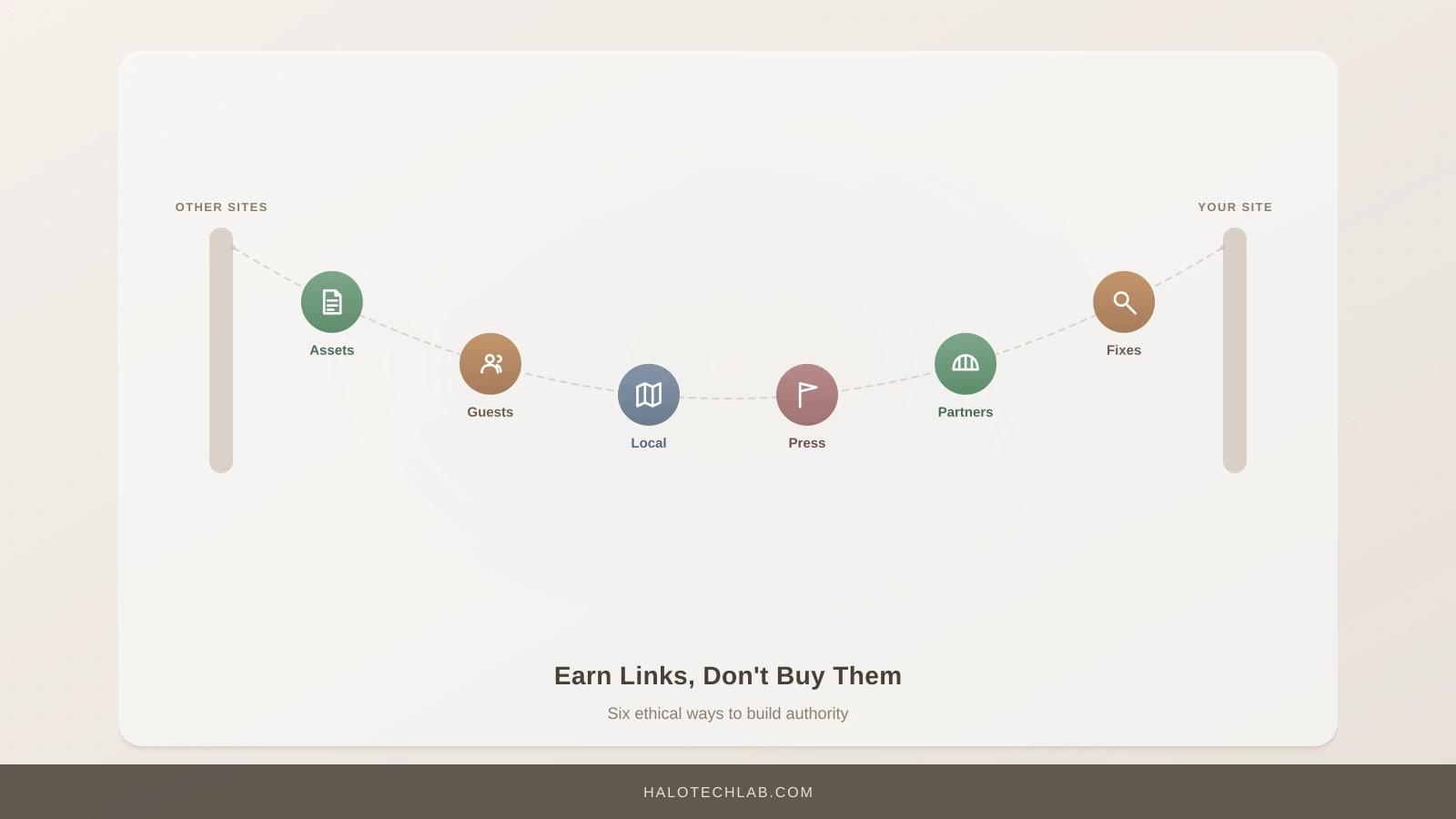
You have probably heard that backlinks are important for SEO. But every time you look into it, the advice seems to be aimed at large companies with marketing teams and PR budgets. What about a small business in the UK with limited time and no dedicated SEO person?
The good news is that some of the most effective backlink strategies are actually easier for small businesses to execute than large ones. They rely on genuine relationships, local community ties, and real expertise rather than corporate PR machinery.
This article is part of our comprehensive guide to SEO, GEO, and AI search for UK small businesses.
Why Backlinks Still Matter in 2026
A backlink is simply a link from another website to yours. Google treats these as votes of confidence. The more high-quality websites that link to you, the more authoritative Google considers your site, and the higher you are likely to rank.
With the rise of AI search, backlinks have become even more important. AI tools like Google AI Overviews, ChatGPT, and Perplexity tend to cite content from authoritative sources, and backlink profile is one of the strongest signals of authority.
A single backlink from a respected industry publication or well-known local business can be worth more than hundreds of links from obscure directories. Quality over quantity is the defining principle.
Strategy 1: Create Linkable Assets
The most sustainable way to earn backlinks is to create content that other people naturally want to link to. This is called a "linkable asset."
Types of Linkable Assets
Original research or surveys. Conduct a simple survey of your clients or industry peers and publish the findings. "2026 UK SME Digital Readiness Survey" is the kind of content that journalists, bloggers, and other businesses cite and link to.
Comprehensive guides. In-depth, definitive guides on topics in your field attract links from people who want to reference a thorough resource. This entire article cluster is an example of that strategy.
Free tools and calculators. A simple online calculator (e.g., "Website Cost Estimator" or "ROI Calculator for Business Automation") attracts links because it provides ongoing utility. People link to useful tools.
Infographics and visual data. Well-designed visual summaries of data or processes are highly shareable and linkable, especially when you offer an embed code.
Templates and checklists. A downloadable "Website Brief Template" or "SEO Audit Checklist" provides practical value that earns links and shares.
The investment in creating a linkable asset pays dividends over months and years, as it continues to attract links long after publication.
Strategy 2: Guest Posting (Done Right)
Guest posting means writing an article for another website in exchange for a link back to yours. When done well, it builds genuine relationships, exposes your expertise to new audiences, and earns quality backlinks.
How to Find Guest Posting Opportunities
Industry publications. Most trade publications and industry blogs accept contributor articles. Search for "[your industry] + write for us" or "[your industry] + contributor guidelines."
Complementary businesses. If you are a web developer, approach a digital marketing agency's blog. If you are an accountant, approach a business advisory firm's blog. You are not competitors, and you can offer genuinely useful content to each other's audiences.
Local business blogs and news sites. Many local news sites, business groups, and community organisations accept guest contributions from local businesses.
Guest Posting Best Practices
Write genuinely useful content, not a thinly veiled advert for your services. The article should stand on its own as valuable to the host site's audience. Your backlink typically sits in an author bio at the end or naturally within the content.
Aim for one to two guest posts per month. Quality matters far more than volume.
Strategy 3: Local Directories and Citations
For UK small businesses, local directories are one of the easiest sources of backlinks. Many also improve your local SEO by strengthening your business's geographic signals.
Key UK Directories
- Yell.com
- Thomson Local
- FreeIndex
- Yelp UK
- Scoot
- Hotfrog UK
- Cylex UK
- Your local Chamber of Commerce
- Your local council's business directory
Industry-Specific Directories
Every industry has its own directories, and these are often more valuable than general ones. A listing on Checkatrade for a tradesperson or The Law Society for a solicitor carries significant authority.
Search for "[your profession] + UK directory" or "[your industry] + association" to find relevant ones.
For a more detailed look at local citations and directories, see our guide on local SEO for service businesses in London and the South East.
Strategy 4: PR and Media Outreach
Getting mentioned in the press is one of the most powerful ways to earn high-authority backlinks. And it is more accessible than most small business owners realise.
HARO and Journalist Request Services
Services like Help a Reporter Out (HARO), Qwoted, and ResponseSource connect journalists with expert sources. Sign up, monitor requests in your area of expertise, and respond quickly with useful, quotable insights.
When a journalist uses your quote, they typically link to your website. A single mention in a national publication can dramatically boost your domain authority.
Local Press
Your local newspaper, business magazine, or community website is often looking for stories. A new hire, a significant client win, a community initiative, or a unique business milestone are all newsworthy at the local level.
Build relationships with local journalists. Follow them on social media, share their articles, and reach out when you have a genuine story. This is relationship-building, not spam.
Being a Data Source
Journalists need data and expert commentary. If you can provide original statistics, survey results, or expert analysis, you become a valuable source they will return to repeatedly. Each citation typically includes a backlink to your site.
Strategy 5: Partnerships and Collaborations
Your existing business relationships are an untapped source of backlinks.
Suppliers and partners. If you have a strong relationship with a supplier, ask if they feature clients or partners on their website. Many do.
Client testimonials. Offer to provide a testimonial for a tool or service you genuinely use. Most companies feature testimonials on their site with a link back to your business.
Joint content. Co-create content with a complementary business. A joint webinar, research report, or guide benefits both parties and naturally generates links from both websites.
Sponsorships. Sponsoring local events, charities, or community organisations typically earns a backlink from their website. Even modest sponsorships (often under £100) can yield authoritative local links.
Strategy 6: Broken Link Building
This is a more advanced technique, but it is highly effective and completely ethical.
Find pages in your industry that link to resources that no longer exist (404 errors). Create equivalent content on your own site. Then contact the site owner, let them know about the broken link, and suggest your content as a replacement.
Tools like Ahrefs and Check My Links (a free Chrome extension) can help you find broken links at scale. The success rate is typically low (5-10% of outreach results in a link), but each link you earn is highly relevant and valuable.
What NOT to Do
Equally important as knowing what works is knowing what to avoid.
Never buy backlinks. Google's algorithms are increasingly sophisticated at detecting paid links. The penalties can be severe, including a complete drop in rankings. No legitimate shortcut exists.
Avoid private blog networks (PBNs). These are networks of websites created solely to provide backlinks. Google actively identifies and penalises them.
Avoid link farms and low-quality directory submissions. Submitting your site to hundreds of low-quality directories is at best a waste of time and at worst a penalty risk.
Never use automated link-building tools. These generate spammy, low-quality links that do more harm than good.
Avoid reciprocal link schemes. "Link to me and I will link to you" on a large scale is a recognised manipulation technique. Natural reciprocal links between genuinely related businesses are fine, but systematic exchanges are not.
The common thread: if a backlink strategy feels like gaming the system, it probably is, and Google is better at detecting it than you think.
Tracking Your Backlink Profile
Monitor your progress with these tools:
Google Search Console (free). The Links report shows you which sites link to yours and which of your pages receive the most links.
Ahrefs or SEMrush (paid). These provide detailed backlink analysis, including the authority of linking sites, anchor text distribution, and new/lost links over time.
Set a monthly check. Review your backlink profile once per month. Look for new links earned, check for any suspicious or low-quality links, and track your overall domain authority trend.
For a broader view of which metrics to track, see our guide on SEO metrics that actually matter.
A Realistic Timeline
Link building is a long game. Here is what to expect:
Month 1-2: Set up local directory listings, fix any existing broken links, create your first linkable asset.
Month 3-4: Begin guest posting outreach, sign up for journalist request services, reach out to partners for link opportunities.
Month 5-6: Start seeing results from guest posts and PR efforts. Your first linkable asset begins attracting organic links.
Month 6-12: Compound growth. Each new link strengthens your authority, making future content more likely to rank and attract links naturally.
Consistency is everything. One link per week is 52 quality links per year, which is enough to significantly improve your domain authority and search rankings.
Key Takeaways
- Backlinks remain one of the strongest signals for both traditional SEO and AI search visibility in 2026.
- Create linkable assets (original research, guides, tools, templates) that attract links naturally over time.
- Guest post on industry publications and complementary business blogs for quality, relevant links.
- Claim listings on key UK directories (Yell, Thomson Local, FreeIndex) and industry-specific directories.
- Use PR and journalist request services (HARO, ResponseSource) to earn high-authority media links.
- Leverage existing business relationships: suppliers, partners, clients, and local organisations.
- Never buy links, use PBNs, or employ automated link-building tools.
Frequently Asked Questions
How many backlinks does a small business website need?
There is no universal number. What matters is the quality and relevance of your links relative to your competitors. Check what your top-ranking competitors have using a tool like Ahrefs, and aim to build a comparable profile over time. For most local UK businesses, 50-100 quality backlinks from diverse, relevant sources can make a significant difference.
How long does it take for backlinks to affect rankings?
Individual backlinks can take weeks to months to be fully processed by Google. The cumulative effect of a consistent link-building campaign typically becomes visible in search rankings within three to six months. Some high-authority links (from major publications) can have a noticeable impact within weeks.
Is it worth paying an agency for link building?
It can be, but proceed with caution. Reputable SEO agencies build links through legitimate outreach, content creation, and PR. Avoid any agency that guarantees a specific number of links per month or cannot explain exactly how they build them. If the price seems too good to be true, the methods are probably not ones you want associated with your site.
If you want to build a sustainable backlink strategy as part of a broader search visibility plan, get in touch with Halo Technology Lab. We help UK small businesses build the kind of online authority that gets noticed by both Google and AI search tools. See our content marketing calendar guide for the content strategy that supports link building.
Enjoyed this? Get the next one by email
Practical AI playbooks, build logs and tool teardowns. One email a week, free, unsubscribe in one click.
Related Articles
Measuring Your Website's SEO Performance: Metrics That Actually Matter
Forget vanity metrics. These are the SEO numbers that actually indicate whether your strategy is working.
How Google SGE Changes SEO for Small Businesses
Google's AI-powered search results are reshaping SEO. Here's what it means for your small business website.
Content Marketing Calendar for SMEs: What to Post and When
A practical content calendar framework for small businesses — what to publish, how often, and on which channels.